The Art of Mosaic - history and process
Posted on November 06, 2025 by Steph
History
A mosaic is a pattern or image traditionallly made of small regular or irregular pieces of colored stone, glass or ceramic known as tesserae, held in place by a cement morta.
Mosaics are often used as floor and wall decoration, and were particularly popular in the Ancient Greece and Roman world. However, begining there existance in the Mesopotamia period in the 3rd millennium BC where they used stones, shells and ivory to decorate buildings.
Ancient mosaic would create floor mosaics depicting scenes of every day life. Tyically made from broken or carved stones cut into shapes, mainly squares and triangular peices and placed directly into the morta to create an image.


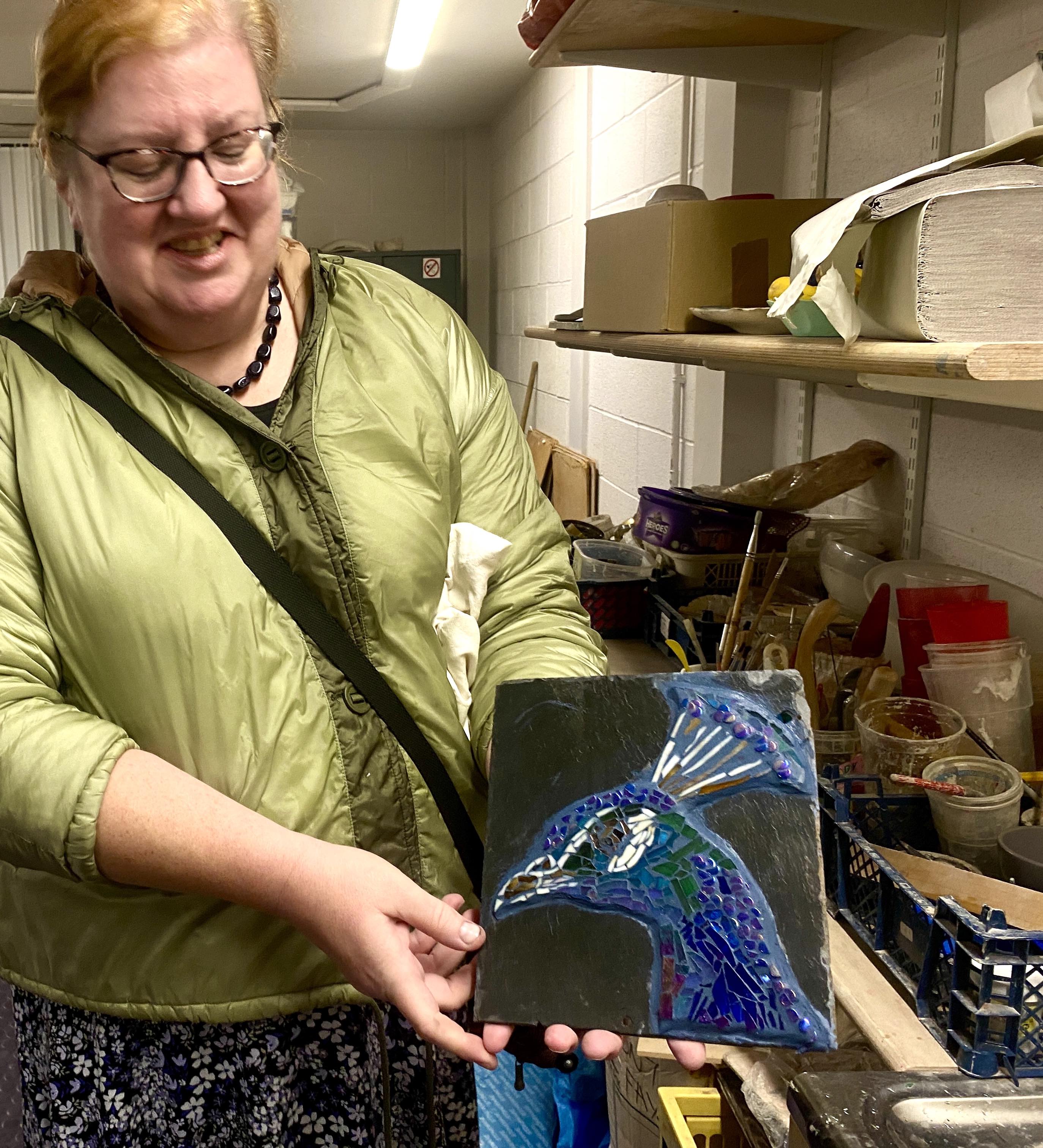
Contemporary mosaic artists use of range of materials, that either inform a story to be told or beause of the qualitiy of that particular material. Ranging from ceramin, porcelain, stone, glas, stained glass, formed glass, pottery, shells, metal, found objects and waste materials. Food, flowers and paper can be utilised in non permanant artworks.
The Italians are at the heart of the mosaic world, Ravenna at its centre. Here the ancient art form was elevated into new ways of handling tesserae and the language of moasic explored. Forming the new wave of international mosaic artists today. Creating sculptural artworks, using fiberglass, polystyrene and cement and printed tiles for added informed patternation to surfaces. Pushing the bounderies of the placement of the tesserae on the artworks, the andamento
Mosaic Movement 'andamento'
We describe mosaic art as having a language of its own. Much like music ebs and flows, so does mosaic. I like to explain this as a sparklers trail similar to a conductor leading an orchesta, you can visualise that movement of sound. This movement in mosaic is called andamento. Created by the arrangement and flow of tesserae creating visual rythm, depth and expression, that carries the eye through and around the artwork. Creating focal points and expression.
This theory combined with the size, shape and direction of tesserae is the modern interpretation of an ancient artform.

Cleo Mussi
 Mia Travonatti

Lynne Chinn

The Treatment Rooms

Kelly Knickerblocker

Processes of Mosaic
Direct Method - The tesserae is placed directly into the morta. Option to grout or not.
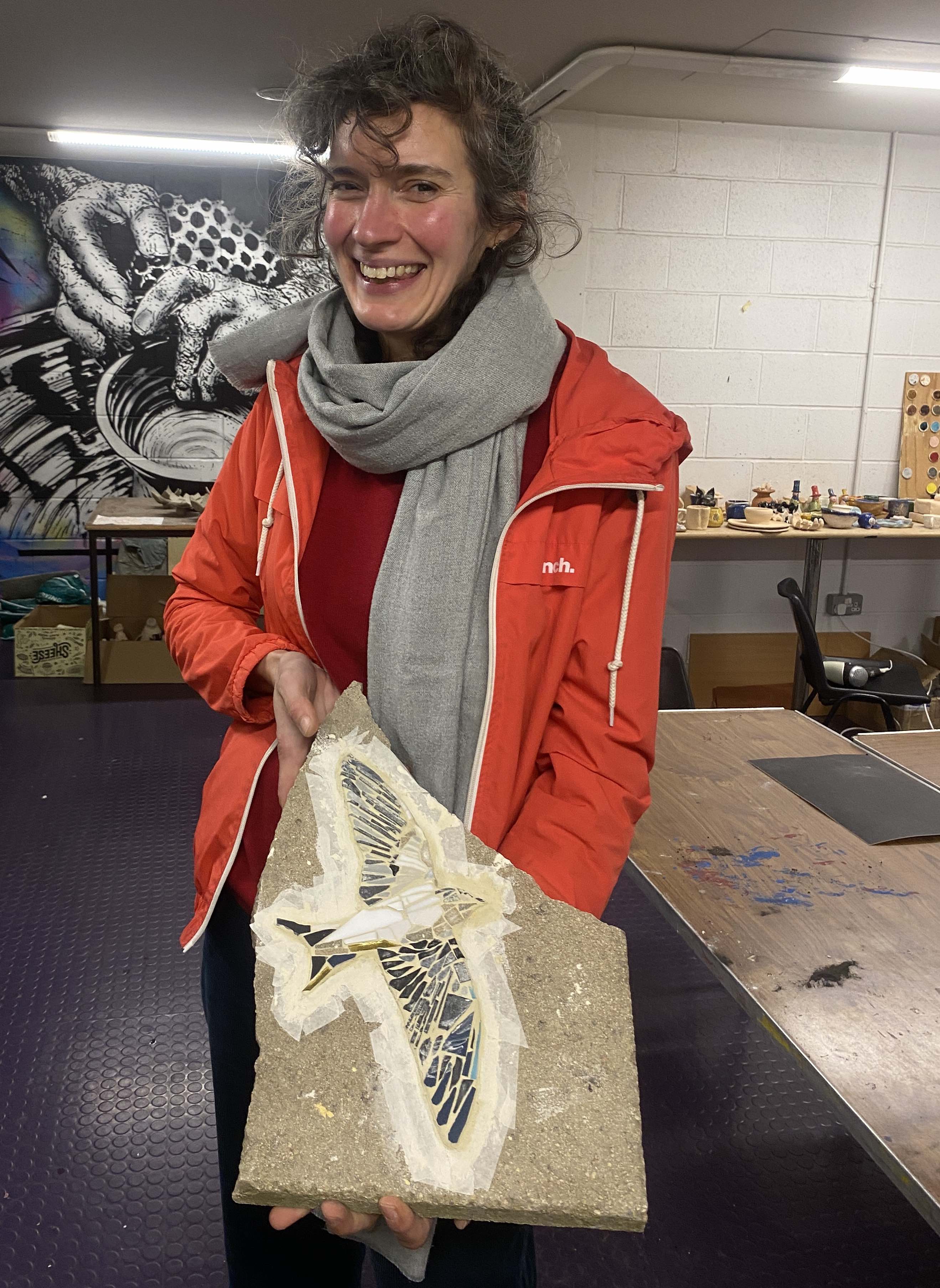
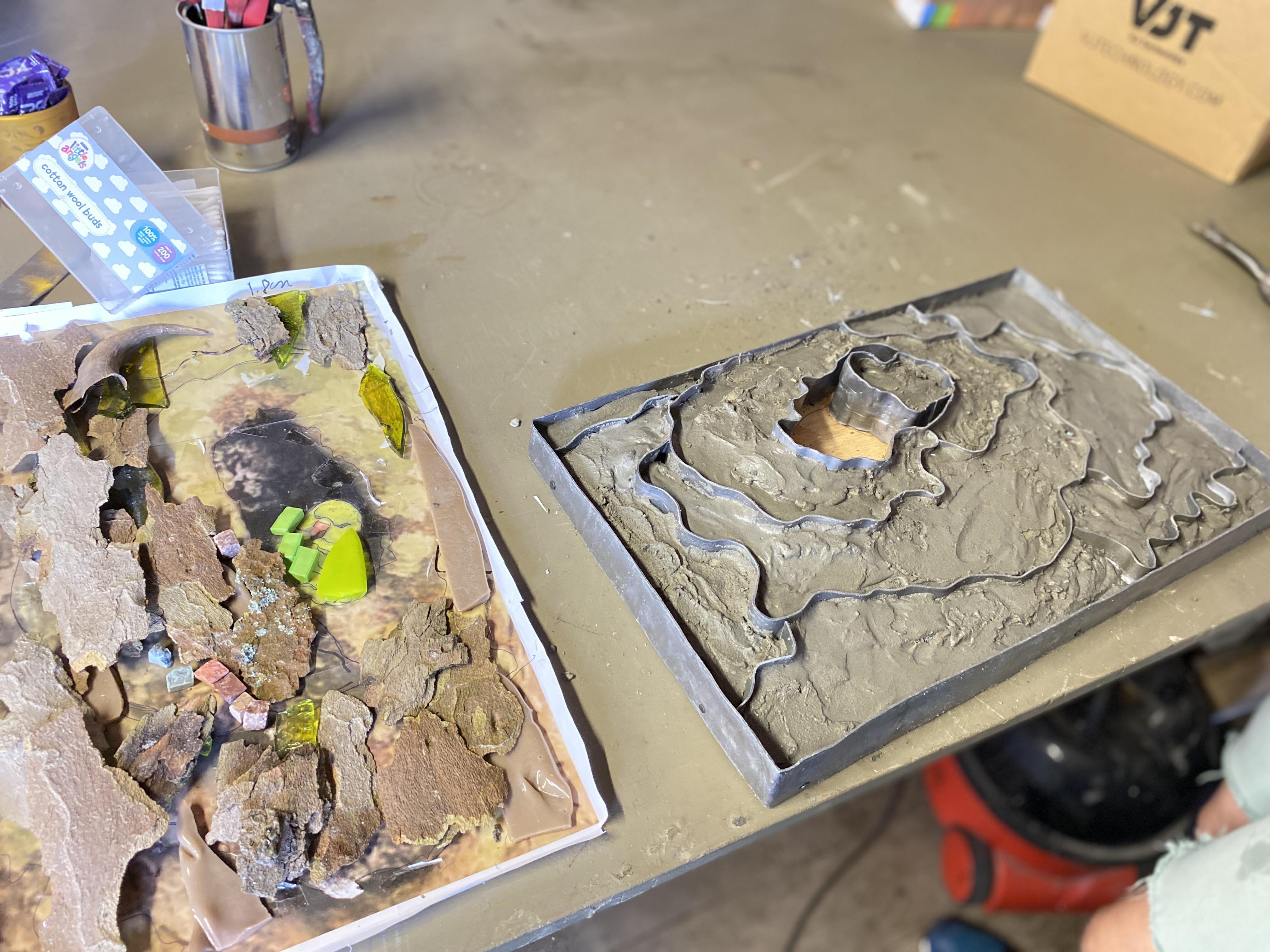
Reverse Method - there a tessarea is placed and stuck upside down on a draw image . using a temporary glue, like wall paper paste or traditionally cooked flour and water. Allowed to dry, then turned the right way and the mosaic is stuck into the morta paper side up. Paper is then removed.
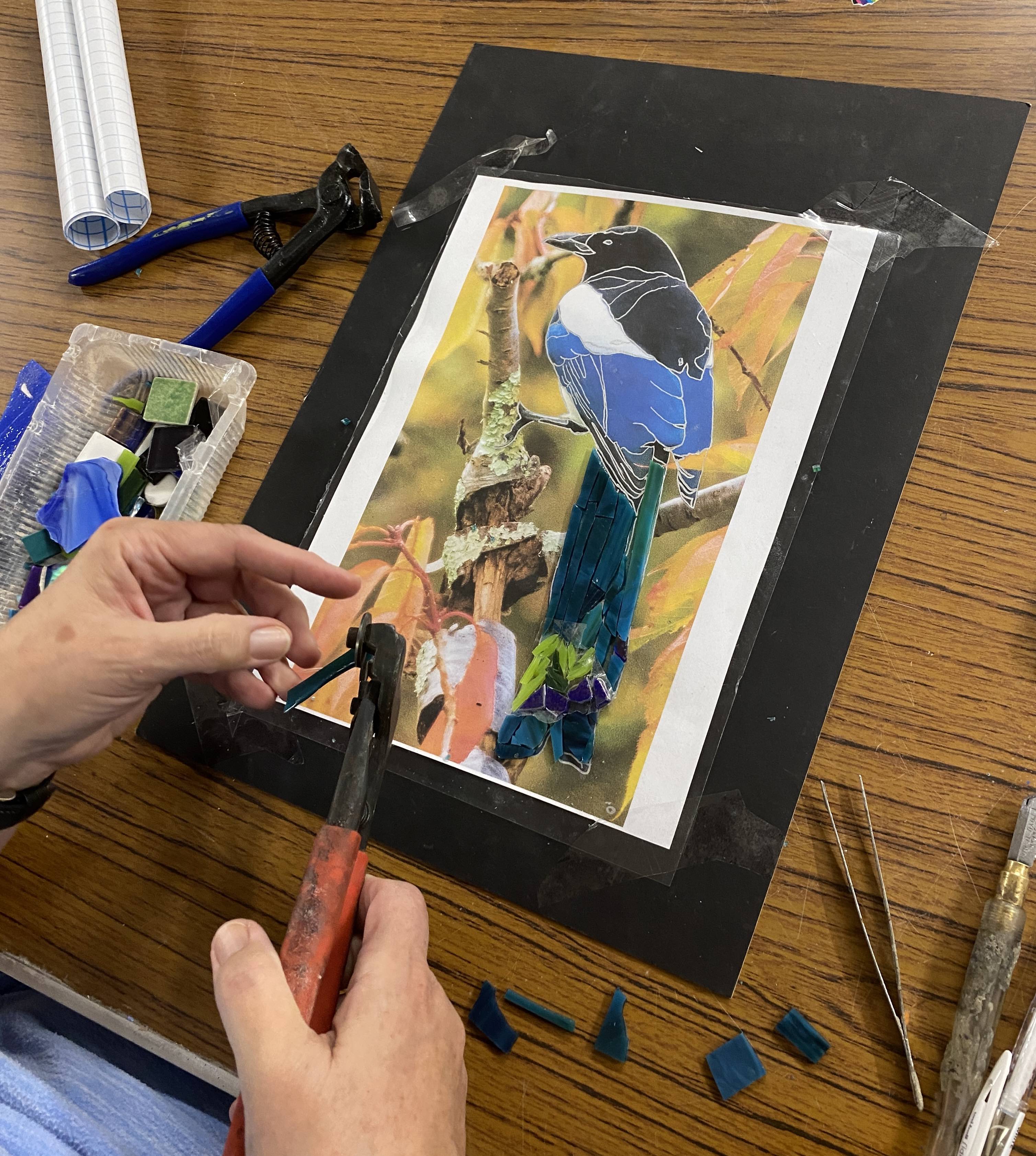
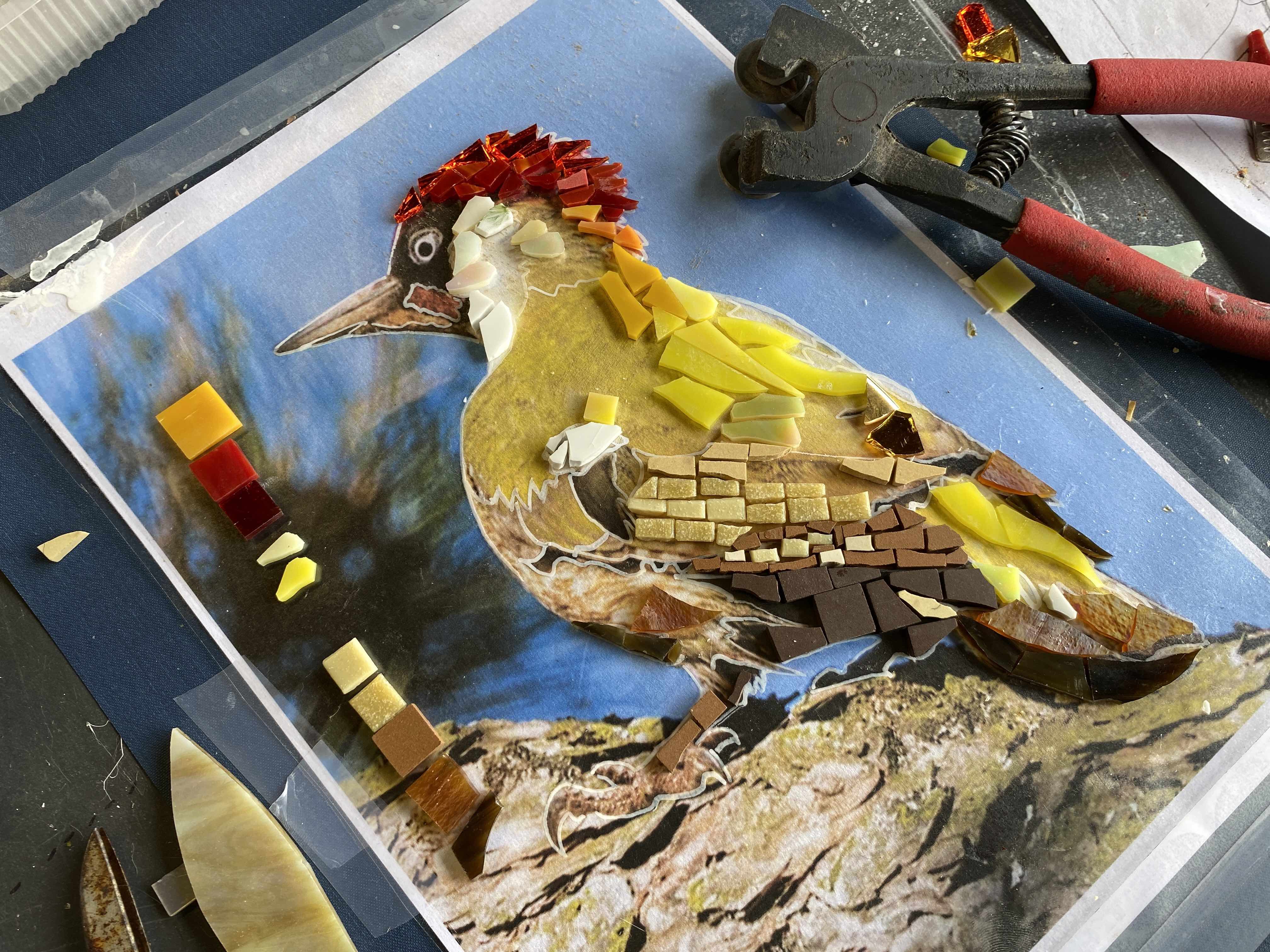
Indirect method - Tessarea are placed onto a temporary surface ie sticky plastic, that covers a drawn or photographed image. The created mosiac is stuck to plastic surface. and is then covered in plastic to make a sandwich. The backing plastic is removed carefully. The mosaic is stuck into the morta like the reverse method. Plastic is removed.

Or
Tessarea are stuck onto a mesh which is then placed into the morta section at a time

Adhesive and grout - substrate - interior/exterior
Adhesive is either a strong cement-based paste or epoxy based glue used to stick a tessare to a substrate surface. It can be made flixible using aditives. Its is created to adhere, unlike grout. PVA and other glues are available but considering the artworks final placement it essential.
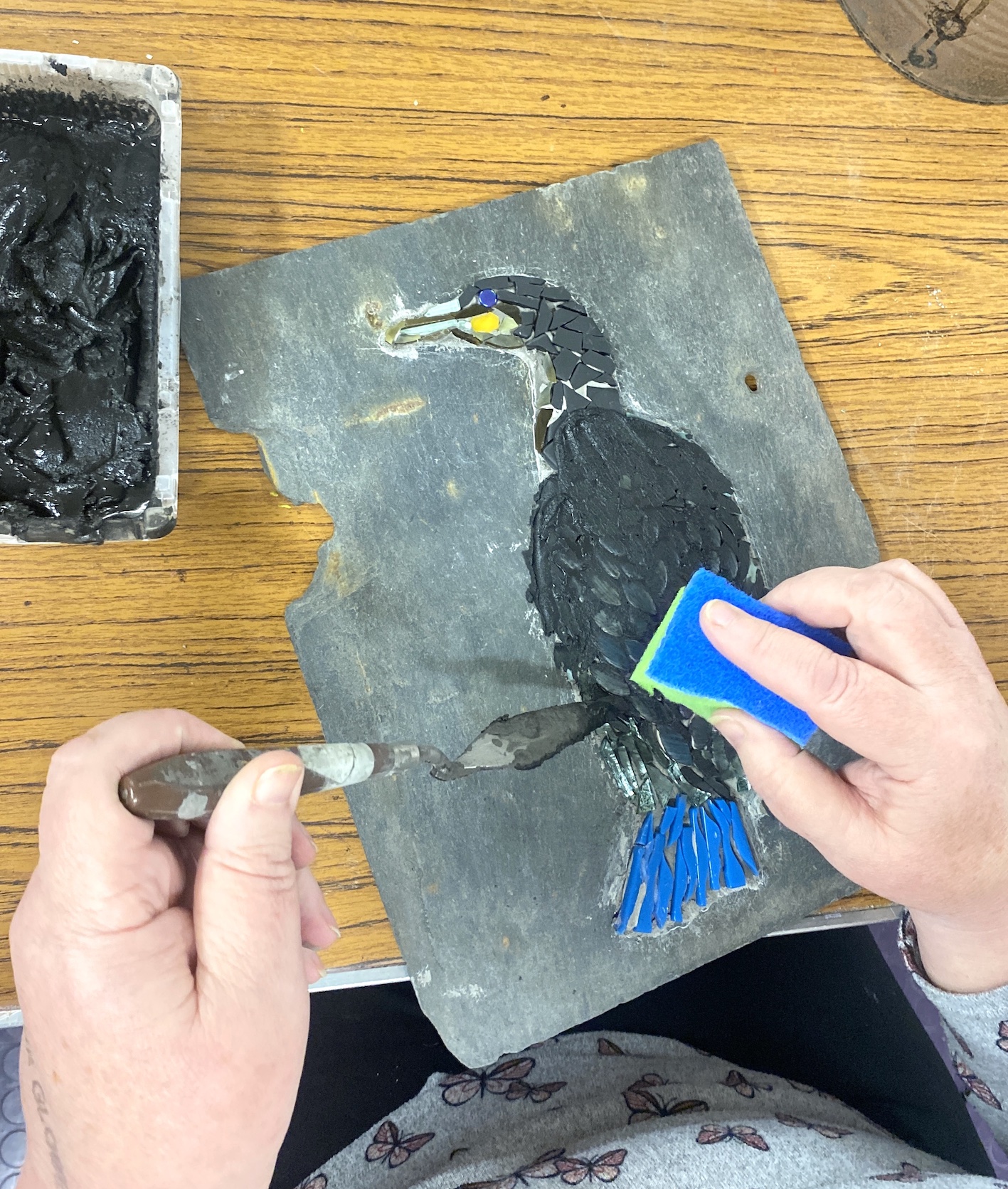
Grout is used to fill the spaces of a mosaic with a fine cement, sand and water mix. This brings adittional strength, rigidity to a mosaic. Protects it agains dirt and water. Particulary for exterior works.
To grout or not to grout. Many artists choose to not grout and place the tessarea directly inot a surface of coloured ahesive.
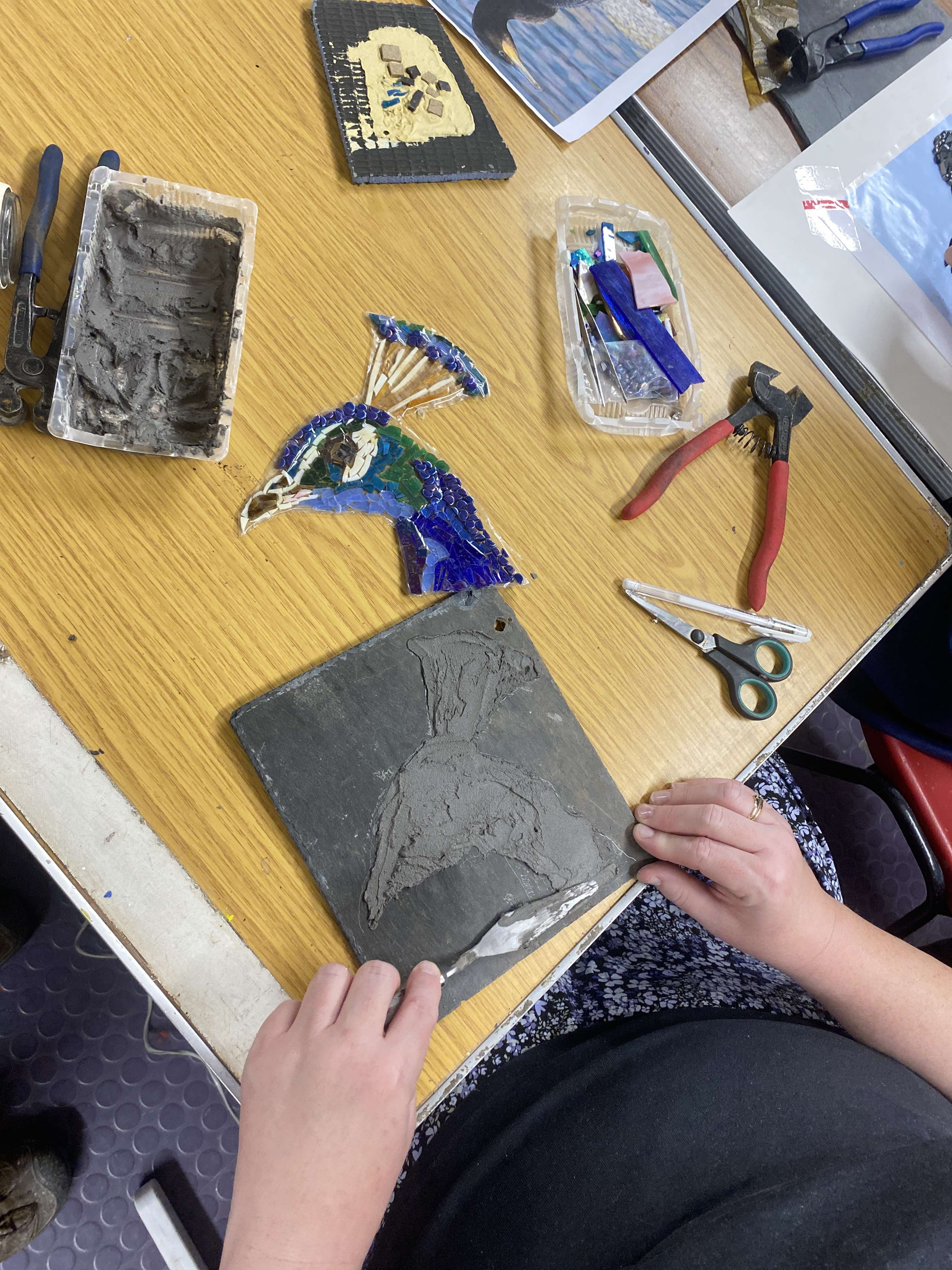
Substrate is the surface in which a tesserrae is attached. Use of different substrates are dependand of the artworks final possition, interior or exterior. Common subrates used are 'wedi board', 'hardibacker board', varities of cement based substrates. Slate and wood can be used. If using wood make use it is only an interior piece.
Interior or exterior there are many issues to consider when placing work in an exterior environment. Carefully read the products application uses or seek assistance.
A personal approach
Every object can be used and interpreted as a tessarea. The use of chosen tessarea will last as long as the material itself can survive. Giving a wide choice of materials to work with, that can form more of an assemblge of materials at times.
Creating artwork is your personal expression and should convey who you are, materials play a large part in this story.
I have created mosaics using different styles and using of tessarea depending on the clients wishes, placement of work, paricipants taking part or if the artwork is interior or exterior. They all play a part in developing the artwork from design, construction to finish
 San Damiano Crucifix - Byzantine Mosaic inspired for Catholic School
 Augustus 1st - Roman inspired mosaic commission
 Seven Sisters - School/Community Project Heritage Fund, Newport
Dragonfly - School/Community Project, Rogerstone
 Nature isn't Neat - Community Project, artworks across Gwent

Community Projects Nature isn't Neat, Bailey Park

School Projects

The Biggest Salmon, Usk

Street Fairy Project
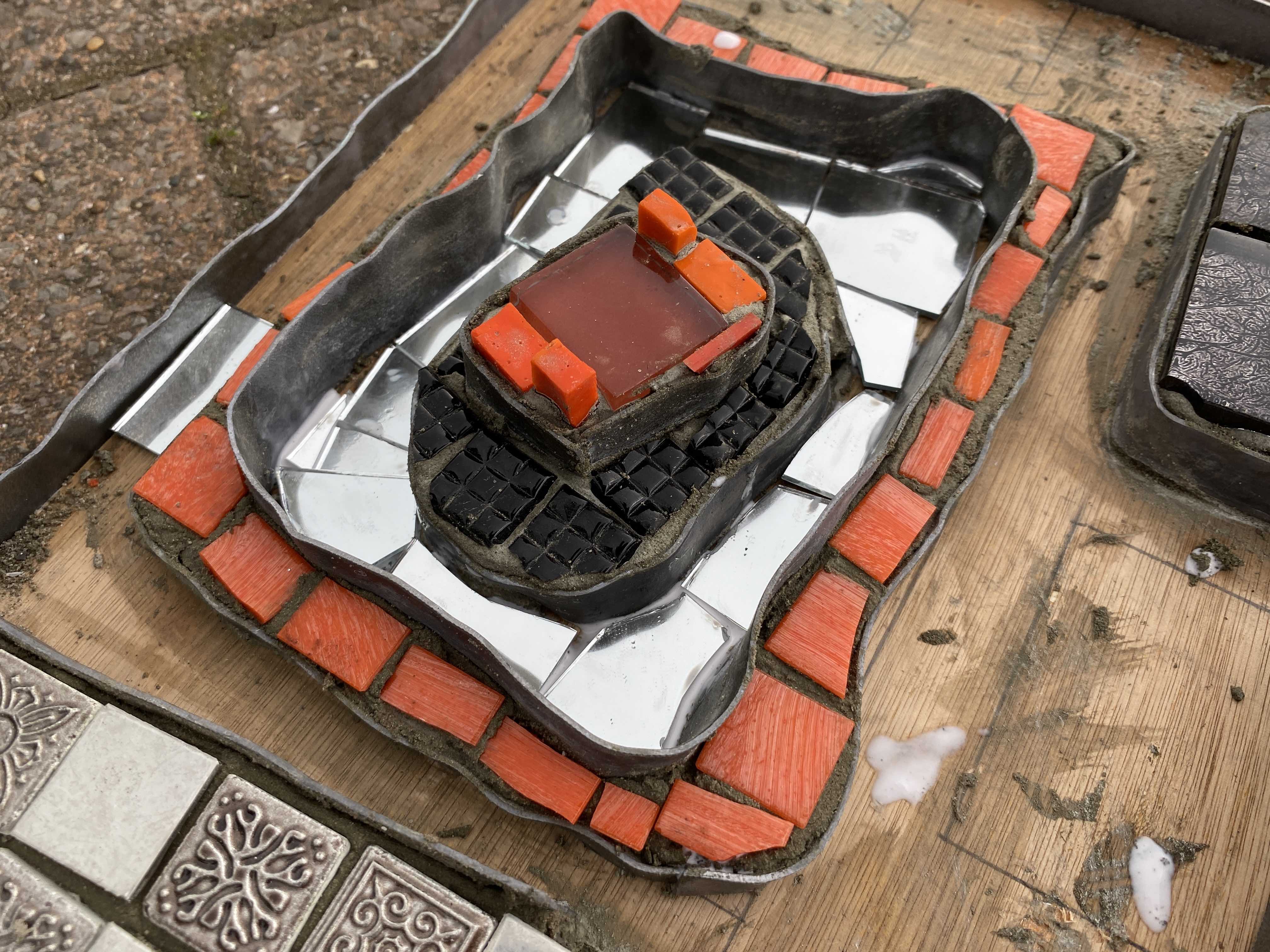
Personal studies - Contoured mosaic
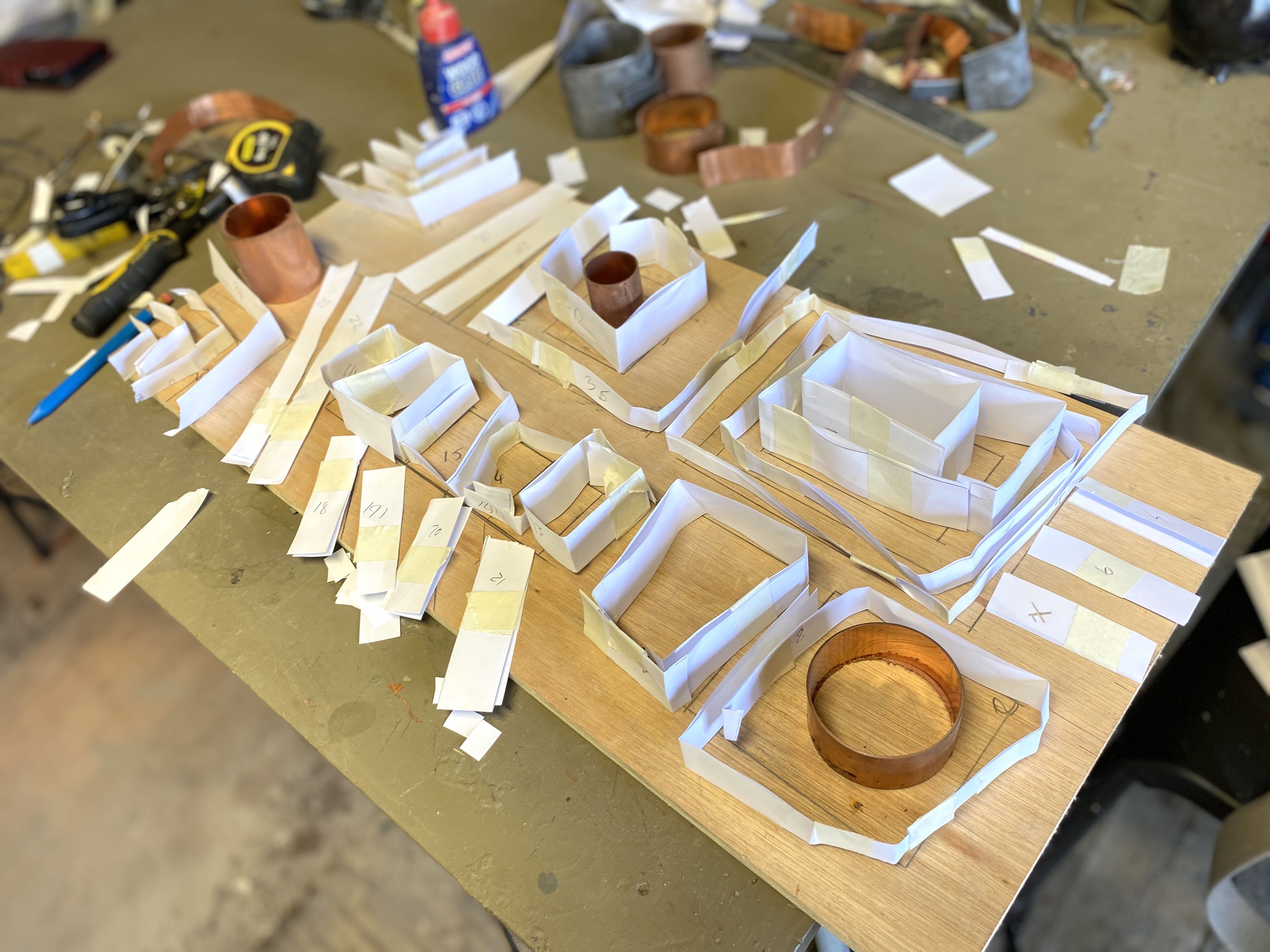
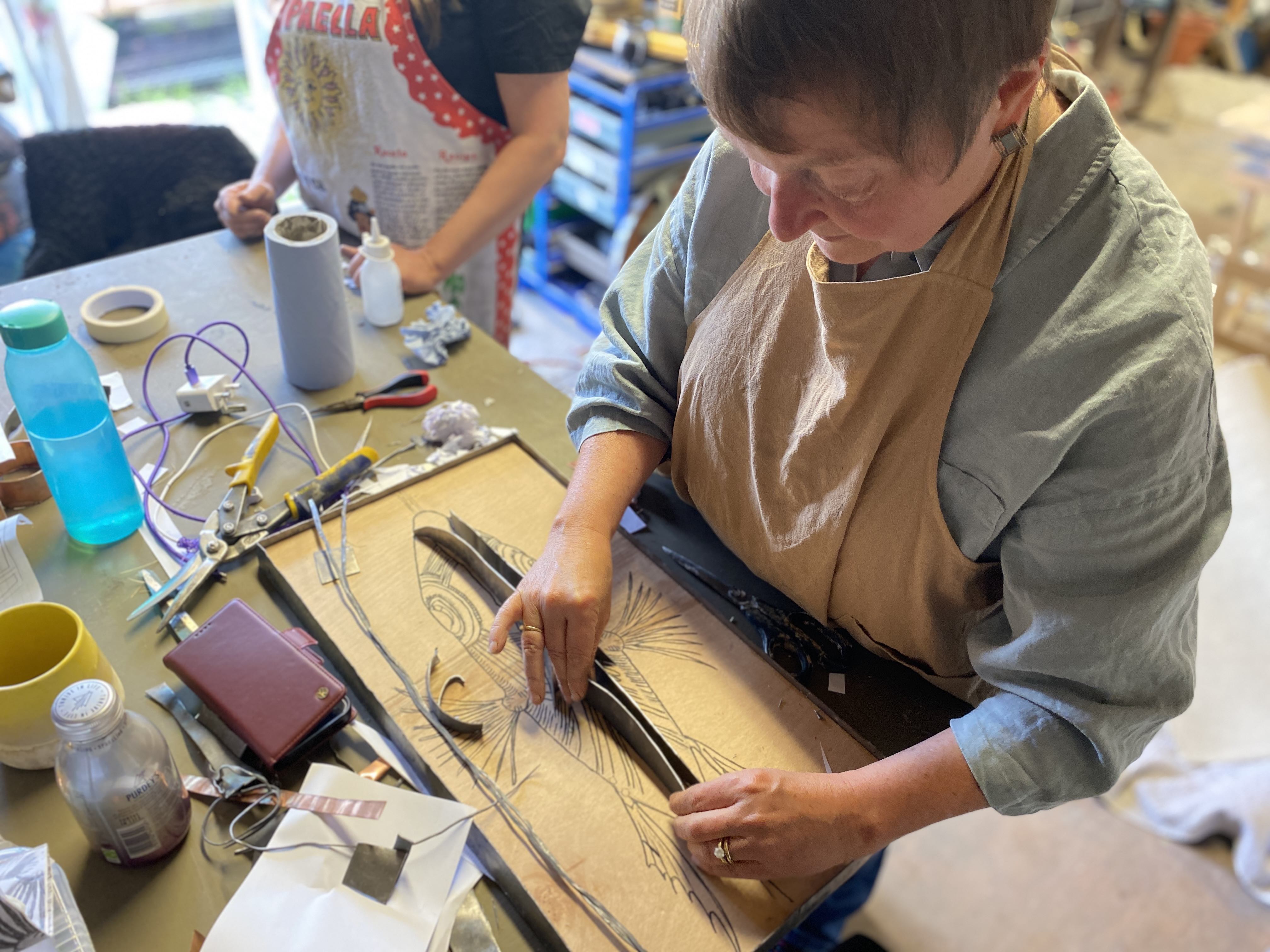
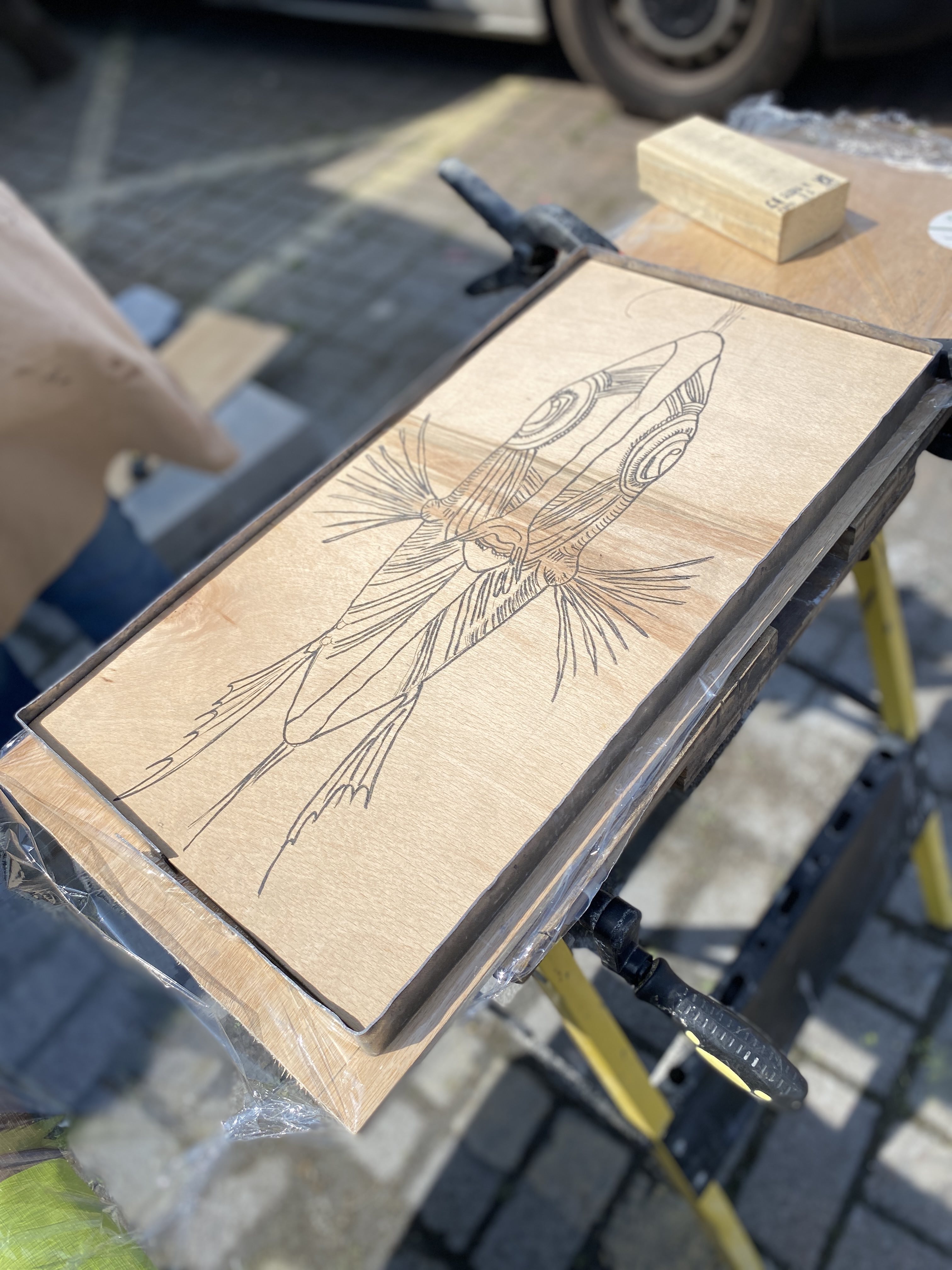
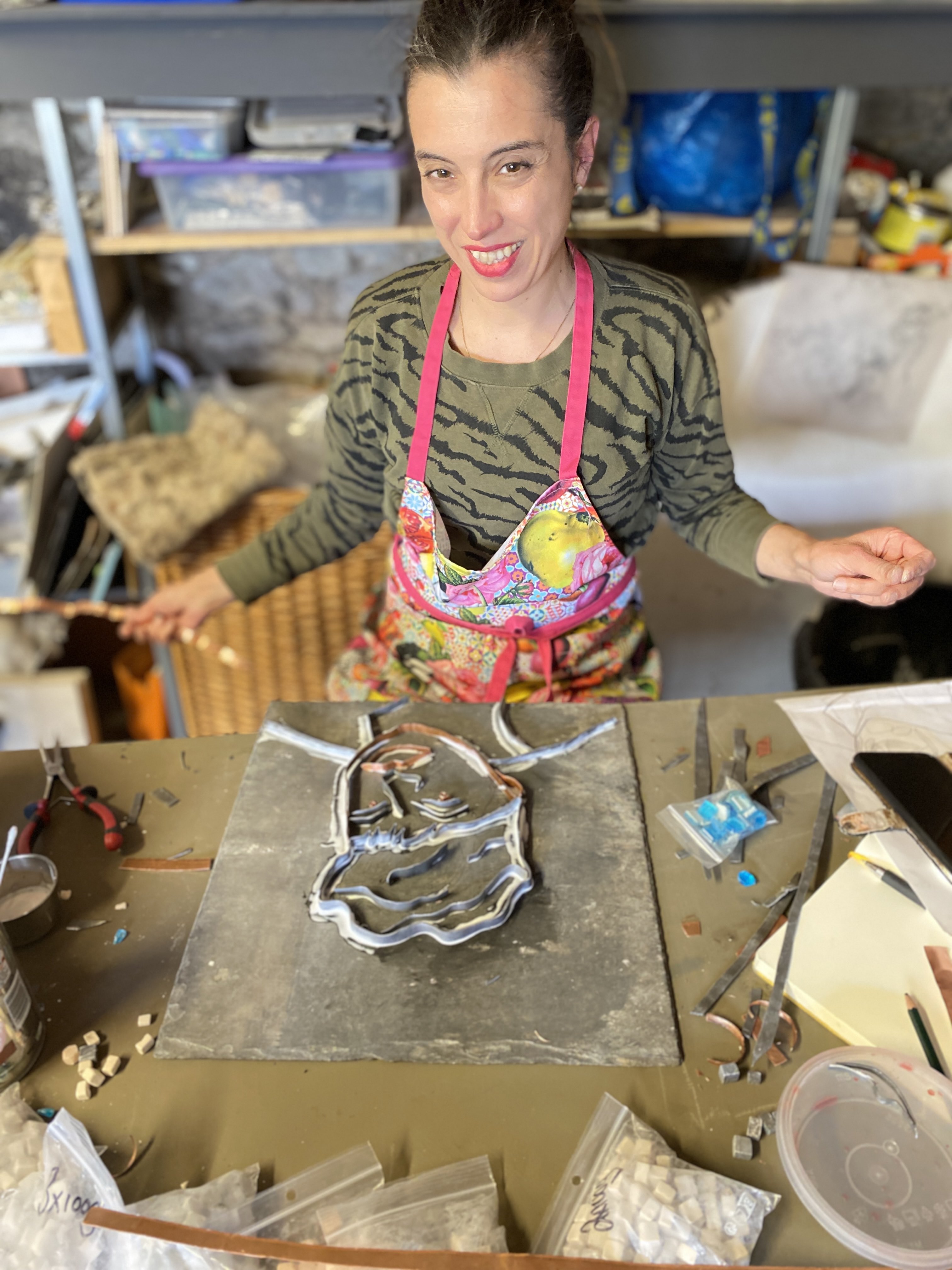
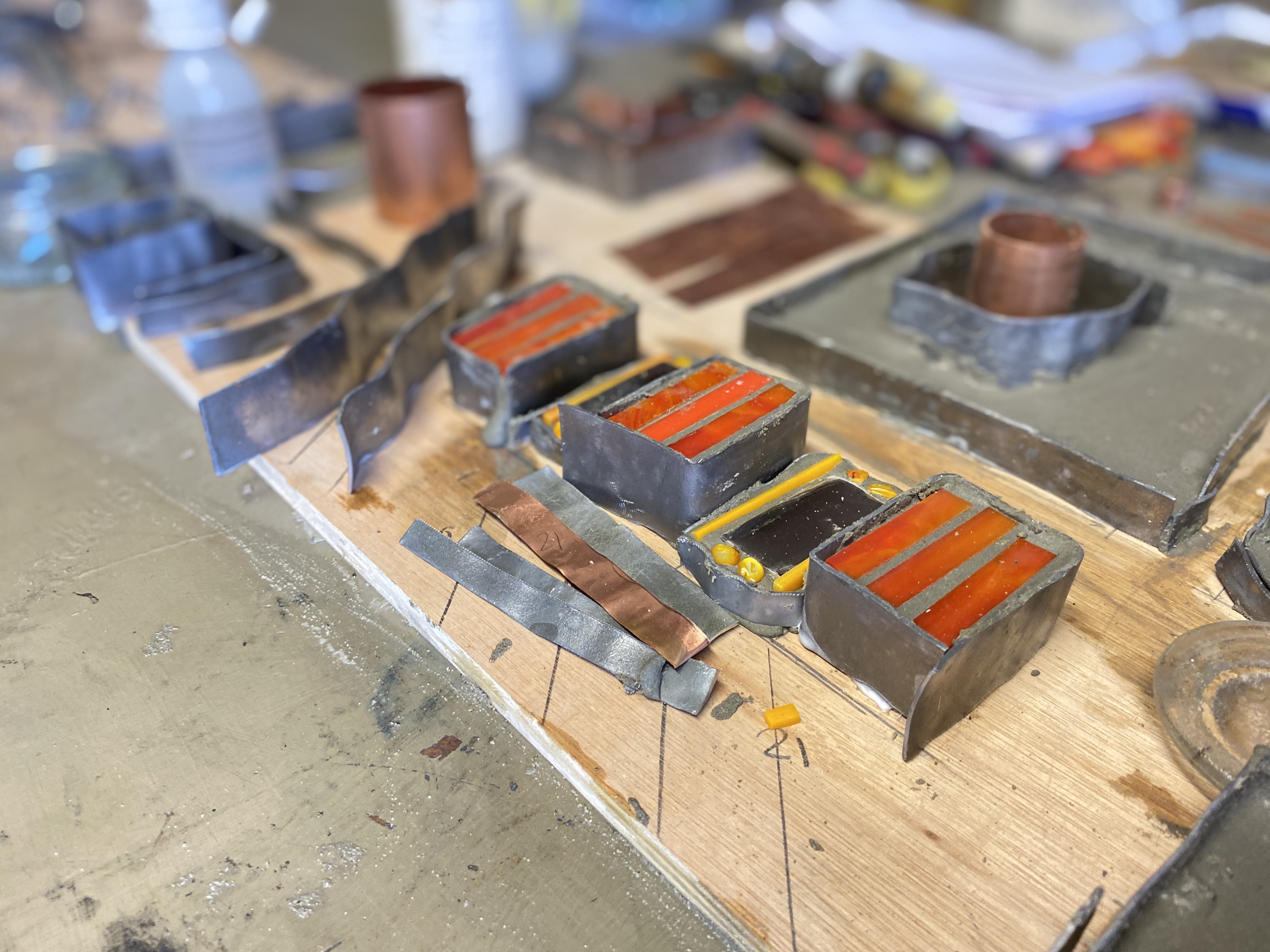
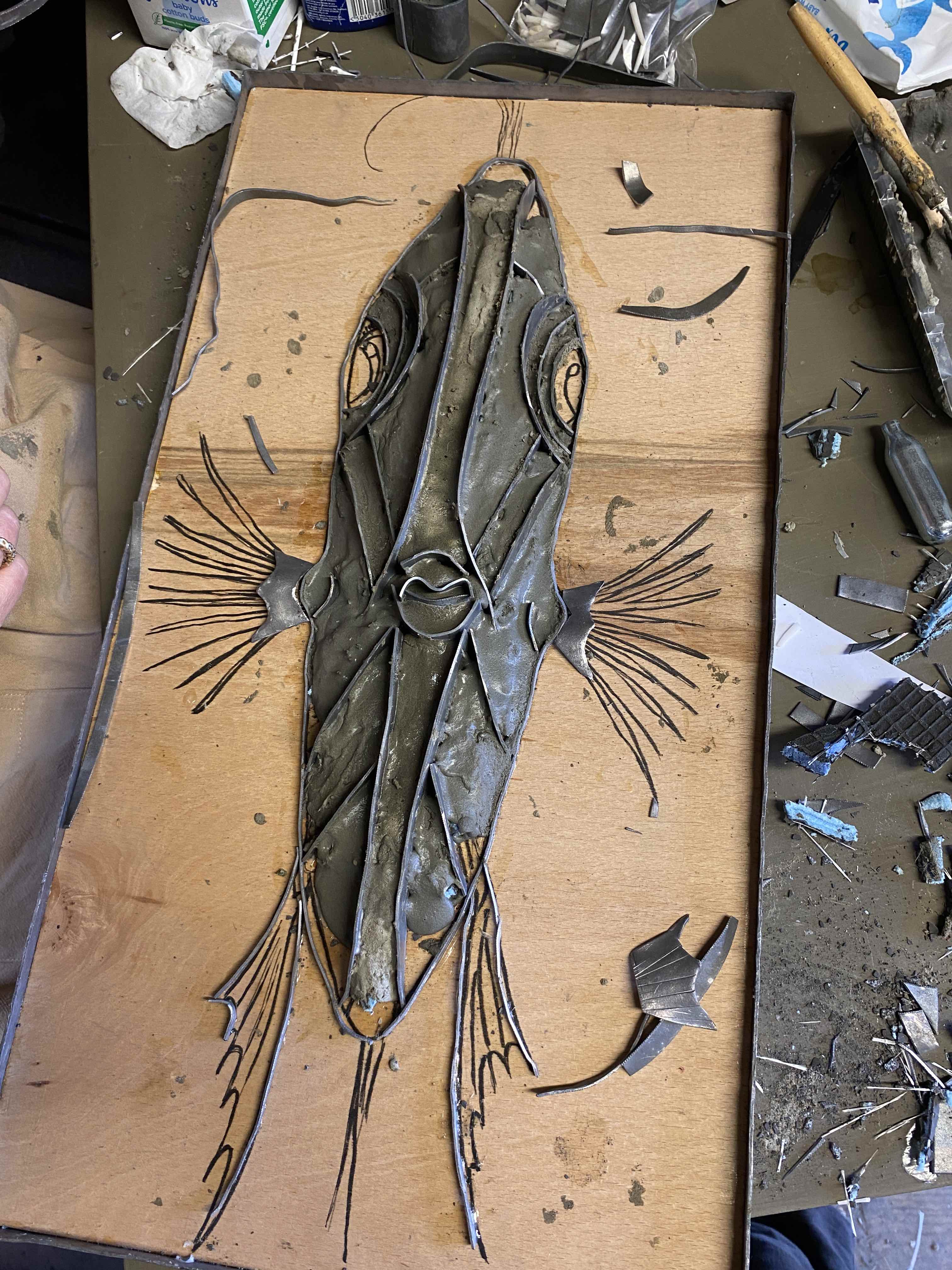
I have develped a method of practice that incorporates metal into the design proces. This creates a definate line, the pencil line that forms the elements of my design. Controlling the height of these lines allows me to bring height and contoured dimensions to the works. Emphasising the definition between forms.


 Lady with bags
Tessare in art assemblage
My personal develpment into this art form has lead me to use of 'informed tessare ' , tesserae that are made of created objects, or materials applied with information to their surface. Using the principles of mosaic theory in arrangement only, not stuck into morta but seeming free from confiments.


.jpeg "#htmlcaption_416")
.jpg "#htmlcaption_417")

.jpg "#htmlcaption_420")